Tuesday, April 17, 2007

A Walk Through the Muslim Quarter

I headed back to the Kotel (Western Wall) for Mincha (afternoon prayers,) and then left through Sha'ar Schem (The Damascus Gate) in the Muslim Quarter on my way home. I snapped a few pictures on the way.

Me in front of the Kotel. The crowds have subsided since the priestly blessing.

More tours of the Moslem Quarter.

Islamic fundamentalist videos on sale.

At the bottom left is Sheikh Achmed Yassin, founder of Hamas. His most famous quote, "The Jews love life, Arabs love death!" He was often described sympathetically by the BBC as "The wheelchair-bound cleric," conjuring images of a kindly, senile old man granting blessings.


The remains of Sheikh Yassin's wheelchair and sandals after an Israeli missile strike prematurely ended his career.

Hijab anyone?


Despite the dislike and hatred most of the residents have for people of my religious persuasion, there is one fact that I admire about the Muslim Quarter: it's organic, a part of the city. Unlike the Jewish quarter, with it's focus on wealthy American tourists, the Muslim Quarter is designed for living. Want to buy a keychain, overpriced Jewelry, and a twenty shekel ice cream? Head for the Jewish quarter, post haste! Want to by a ten shekel pair of shoes and some fruit? The Muslim Quarter is the place to go.

Real goods on sale. Real people live here, not tourists.

Barekka movie, anyone? (sp?)

In the age before Starbucks.

Chassidic family outside Sha'ar Schem, the Shechem Gate

Sunday, April 15, 2007

Another Building in the Yemenite Village

Previous related posts:

Part 1: The Priestly Blessing
Part 2: Walking Through The City of David
Part 3: Into Silwan
Part 4: Homes in the Yemenite Village

And now, on to the second, completed structure. This building, about seven stories, was first completed by an Arab contractor, who then sold the building to the Jews. The contractor then disappeared into Ateret Cohanim's "witness protection" program to prevent retaliation from his neighbors.


The new structure, from the bottom looking up.


Photographs of the desecrated shul (synagogue) after the 1929 riots

The new shul

The stairwell is adorned with a photograph of Rabbi Tzvi Yehudah, who was the major spiritual impetus behind the settlement movement after the Six Day War in 1967. Also a ghostly reflection of me taking the photograph.


There's a playground on the roof. While Jews can go shopping and talk to their neighbors, it's still too dangerous to let the children play in the streets.


A better view of the old city from the roof


Me with one of Steven's boys


Our guide and his kid

And now, to walk back to the Old City of Jerusalem.

Above the widnshield of this car, a dome peeks over the parapet of the rooftop. This is the original Yemenite shul. Ateret Cohanim has its eye on this building.

On the way back, our guide points out the original Yemenite shul, today occupied by Arab "absentee tenants." Our guide asks us not to point, to avoid offending the neighbors, who also know what this building was.

Yours truly on the streets of Silwan. Here I'm standing in front of some Al-Aksa decorations on someone's walls.

It' a busy day. Open-air zoomobiles bring tourists through Silwan.

A ground-level view of the excavations in the City of David.

Thursday, April 12, 2007

Homes in the Yemenite Village

Ateret Cohanim has managed to acquire two properties in the old Yemenite Village. At this point, it's hardly a "village," but more of an urban outpost.


Building Number 1

The first building we visit is actually the home of our guide. The ground floor is already built, and it's where he and his family make their home. Construction has begun on more floors, but progresses slowly. While there is widespread grassroots support from half the country for rebuilding the Yemenite Village and other similar places, there is also widespread grassroots opposition from the other half of the country which opposes it and wishes to simply withdraw from these areas, believing that such a withdrawal would result in a calmer situation.

Yours truly in the beginnings of the new structure.

The day the Jews moved in, word spread quickly throughout the neighborhood and angry crowds gathered around. Rocks, bottles, and anything else the neighbors could get their hands on came hurtling down from the adjacent rooftops by the hundreds.


Balconies above the new building from which the stones came hurtling down.

One policeman was injured. After a time, the situaton calmed down, the neighbors acclimated, although still unhappy, to the idea of living next to Jews. Today, Jews can shop in local stores, and know some of their neighbors on a first-name basis. The conflict is always there, under the surface, ready to flare up again, but today things are calm. Whereas the barrage of rocks ended in a day, the legal barrage was only beginning. While contributions come in to help construct these tiny buildings, opposing groups, also organized and financed by Jews, flood the courts with lawsuits. Every imaginable justification is used for lawsuits; the building will block someone's view, the piping is unsanitary, the lot was used as a basketball court by the local kids. Their goal is not necessarily to win but to get court injunctions to prevent building and exhaust the finances and energies of Jews who want to live in East Jerusalem. Buildings which would normally take months now take years. But the Yemenite Villagers are patient. It should be noted here that all of this land was originally owned by the Yemenites, who turned over their deeds to Ateret Cohanim. These properties have therefore been paid for twice, first by the Yemenites, and later by Ateret Cohanim.

The "roof" (really, the future second floor) of the new building offers some unusual views.
Looking towards the road to West Jerusalem and the Zion Hotel.


The Mount Zion Hotel
The rocky outcropping at the bottom right is actually the walls to the ancient City of David. The houses above are in the City of David itself. On the right is the black dome of the Al Aksa Mosque, built over the ruins of the Jewish Temple Mount.

"Absentee tenant" kids: Uh... who are all these people?

Wife and baby downstairs in the first completed room of the structure.

Our guide, who lives in the downstairs room with his wife and child. Note the riot-proof doors and the rock-proof cages around the lights.

Next, let's see what's in building number two...

Wednesday, April 11, 2007

Into Silwan

Continued from Previous posts:
Part 1: The Priestly Blessing
Part 2: The Yemenite Village
Part 3: Walking Through the City of David

Note: Click on the photographs below to see a larger image.

Walking through an Arab neighborhood is entirely different from walking though a Jewish one. First off, there is absolutely no planning. Since Israel captured East Jerusalem in 1967, there has been wall-to-wall refusal for local cooperation with the Zionist Entity. While the Arabs of East Jerusalem were, and still are, offered full Israeli citizenship, few took the state up on the offer. Anyone who worked with the Israeli government was marked as a collaborator and didn't last long. With Israeli civil servants afraid to enter East Jerusalem, building codes went unenforced, and city planning was all but impossible. The result was an organic, eclectic, third-worldish soup of structures arranged haphazardly on the hillside.

I recognize the logo on the sign as Clalit, one of Israel's major Health Service Providers. And there's no line! But I can't exactly read the rest. Israel still provides socialized health care to East Jerusalem.

Fading posters featuring candidates from last year's Palestinian parliamentary elections still cling to the walls, elections in which the terrorist Hamas gang defeated the terrorist Fatach gang to seize power.

Who will it be, gangster number one?

Or gangster number two?

One can't help but wonder how many of these guys are still alive, since the outbreak of an internal Palestinian civil war following the elections.

Walking along, one also finds ruins, ancient First Temple Period Jewish burial caves, between, often under, the haphazardly built housing.
Entrance to a burial cave, protected with a metal grate, which has been torn off

Alleyways built wide enough for a camel, or perhaps a compact car, are overloaded as semi-trailers push through crowds. It gives the streets a claustrophobic "Black Hawk Down" caginess. Staircases run up and down the hillside, and I have to step aside as a group of children ride a rusted refrigerator barreling down the stairs as a kind of snowless sled.
Steven in Main Street.


Looking down the alley. There's enough room for one-way traffic. Of course, there is no signage, so traffic moves in both directions, resulting in honking, shouting matches, and playing chicken with other motorists.

At last, we have arrived at the Jewish buildings. Coming up next!

Tuesday, April 10, 2007

Walking through the City of David

Continued from Previous posts:
Part 1: The Priestly Blessing
Part 2: The Yemenite Village

Note: Click on the photographs below to see a larger image.

The Elad foundation, in tandem with Ateret Cohanim, has not only been reclaiming and excavating the city of David at breakneck speed, they have also been hard at work publicizing their work, bringing tourists into areas of Jerusalem once too dangerous for Jews to visit. Standing near the Dung Gate, Elad volunteers hand out flyers to the mass of humanity streaming out through the dung gate, leaving the old city after hearing the priestly blessing. Other volunteers offer free tours throughout the City of David and East Jerusalem, via car, foot, or even Segway.


Flyers announcing tours of the Yemenite Village. This one declaring "We have come home!"

The walk to the Yemenite Village takes us through the City of David. Elad has poured millions into the construction of the new facilities, even though absorbing a substantial financial loss. In order to prevent the re-division of Jerusalem, it is critical to bring Jews into these parts of Jerusalem to live, but on a larger scale, it is important to change the consciousness of Israelis about what this place means, and what is here. The eventual goal is that East Jerusalem is no longer thought of as a place where Jews dare not go, but as integral neighborhoods of the city.

Walking through the newly rebuilt entrance to the City of David.

Performers re-enact biblical scenes for the visiting children.

Elad has built a new road, paved and lined with Jerusalem stone, running the length of the city of David.

Another performer stands waiting for his gaggle of children. The ruins he's standing on are believed, although not yet confirmed, to be the location of the grave of King David.


With the holidays afoot, and throngs of visitors, security was tighter than usual. But these guys don't look too tense.

Despite the changing nature of the City of David, with constant construction and renovation, there is still a need for protection. Here we see a Jewish alleyway, blocked with a gate, and a guard booth at the entrance. It should be noted that the Israeli government itself is far too bureaucratic, lethargic, and post-Zionist to engage in any of this work. Renovation, excavation, and security is run through Elad and Ateret Cohanim, which are funded by private donors.

Street of Jewish Housing in the City of David.

Looking at this street, the paved Jerusalem Stone roads, the new housing, I could swear I've been here before. And then I remember... I have! It was a full seven years ago, in August of 2000, about a month before the beginning of the second intifada. I came out here on a tour with the Aish Hatorah Yeshivah, one of my first forays into East Jerualem, to see the grave of King David. At that time, the government, under then Prime Minister Ehud Barak, was preparing the nation for the re-division of Jerusalem. He had already surrendered the Temple Mount and City of David in negotiations, What I remember was a ramshackle guardpost, a dusty lot with some trailers, lots of dirt, garbage, feral cats, and weeds.

It was accepted knowledge that this place was doomed, that the Jews would be expelled from much of Jerusalem, including the City of David and the Muslim Quarter, and that the barbed wire and guard towers slicing through the heart of the city would soon return as part of a final "peace". Of course, then the outraged Arabs, feeling that they had not gained enough through negotiations, began the second intifada. At that point, as bombs went off weekly, and sometimes daily, talk of a final peace were dead in the water, and nobody came even to the Jewish areas in Jerusalem, let alone east Jerusalem. But the Jews of East Jerusalem held out, and while the inferno raged on, this entire promenade, central street, housing, and just about everything you seen in these pictures was built.

The Shiloach pools, at the exit to Hezekia's Tunel, now being excavated and refurbished.

A sunshade covers an area being excavated at the Shiloach Pools

Finally, we come to a promenade, overlooking Silwan and the location of the old Yemenite Village.
Yours truly and Steven, on the promenade overlooking Arab Silwan and the Yemenite Village.

Silwan. In the foreground is a guardpost on a Jewish Kollel (yeshivah for married men.)

Details outlining the location of the original Yemenite Village. Hass Promenade is labeled for reference.

And that's where we're going next. Into Silwan to find the Yemenite Village! Stay tuned...

Sunday, April 08, 2007

The Yemenite Village

Previous related post: The Priestly Blessing


The Jews of Yemen, bordering the southern tip of Saudi Arabia, have always been considered the "originals" of the exile.


First dispatched by King Solomon to establish a southern trading outpost for the united Jewish kingdom, the Yemenite Jews arrived even before the building of the first temple in 2928 (832 BCE.) After the collapse of the Jewish monarchy, and continuing over the subsequent 3,000 years or so, they suffered the same persecutions and agonies as other Jews worldwide. However, unlike other Jewish communities which moved from exile to exile, the Yemenites stayed put for the entire period. Consequently, they preserved a great amount of Jewish knowledge lost elsewhere, including the meanings of obscure words and species names in the Tanach, proper Hebrew pronunciation as originally vocalized, and various customs and prayers in the original. Unlike the Ethiopian community across the Arabian Sea, however, they did not lose contact with the rest of world Jewry and were equally involved in the development of Halahcah (Jewish Law) and jurisprudence over the millenia.


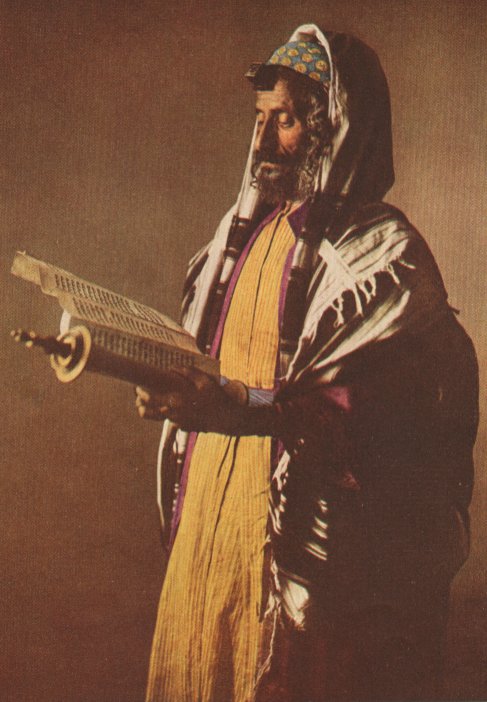
A Yemenite Jew in Traditional Dress
Yemenites had a tradition that the exile would end in the year 5641 (1881 AD) based on a Tanachic reference, and so in that year a few faithful families packed their belongings and began the long march north. Eventually reaching Jerusalem, they sent word back that it was safe to move, and before long a stream of Yemenites began returning to the Land of Israel to begin the long process of rebuilding.

But when they reached Jerusalem, the Yemenites found that they were not welcome to stay. To the local Jews, they appeared, based on their language and dress, to be a bunch of confused Arabs who thought they were Jewish. To the Arabs, they were Jews. So they settled outside the city walls on the then-empty hills beneath the temple mount, outside the city walls in the Kidron Valley. At first living in caves, they eeked out an existence until they were finally able to build themselves true homes.

The beginnings of the Yemenite Village

Gradually the tiny group clinging to the hillside sunk deeper roots and prospered. After a few decades, the tiny settlement had grown to a village of over 2,000. The village served largely as an absorption center, receiving the steady stream of Yemenites returning home to the Land of Israel and giving them a place to stay and adjust until they could get settled. At its height, the village had its own makolet (corner market), hospital, schools, and synagogues.

A Yemenite nurse

The village was on friendly terms with the neighboring Arab village for many decades. However, as the political tide of violent anti-Zionism swept through the land, Haj Amin Al Husseini and his minions, including Izz Adin Al Kassam, stirred up riots and bloodshed throughout the land. Hearing the massacres at Hebron and other similarly isolated Jewish communities, everyone knew that it was only a matter of time until violence struck the Yemenite Village. In 1938, the same year as Krystalnacht in Germany, the riots came to Jerusalem. The Yemenite village was evacuated by the British on August 11th, with the promise that the Yemenites would be allowed to return to their homes after the violence subsided. It was another promise that would go unfulfilled.

A Yemenite Family


A street scene from everyday life in the Yemenite Village

After Israel's War of Independence in 1948, the Yemenite Village, along with the entire eastern half of Jerusalem, including the Kotel (the western wall,) was conquered by the Hashemite Kingdom of Jordan and blocked with barbed wire and armed guards.

The Yemenite village was enveloped and devoured by East Jerusalem, and Jewish life therein was reduced to a memory.

Until now...